
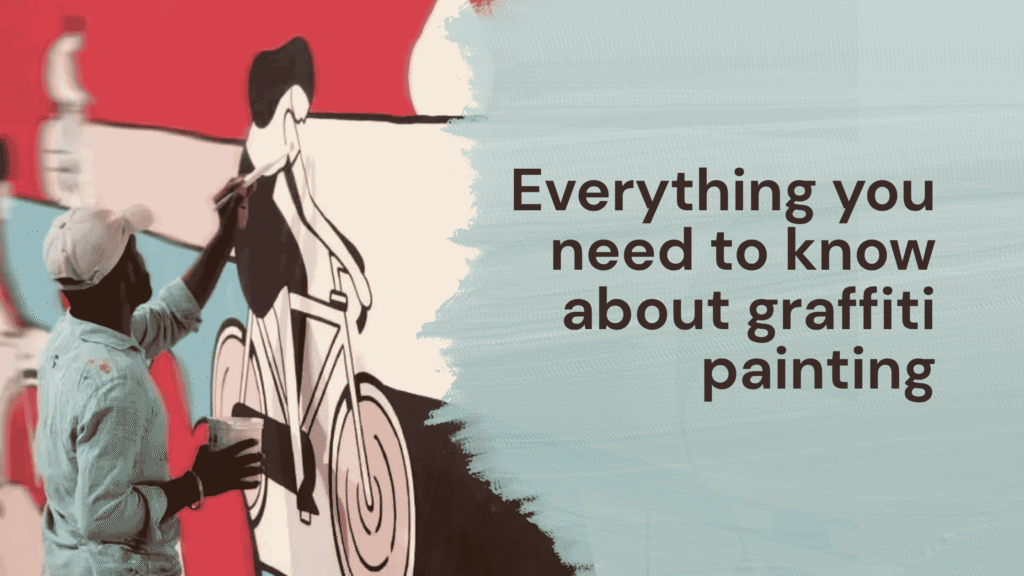
Everything you need to know about graffiti painting
INTRODUCTION
Graffiti painting is an art form that is most expressive and controversial in contemporary times. It is frequently found on urban walls, bridges, and streets and is an expression of imagination and defiance. Some individuals condemn it as vandalism, and there are also individuals who glorify it as a rebellious artistic political expression. Graffiti gives artists an opportunity to reach out to the masses through their ideas, feelings and social messages. With time it has changed to the sophisticated tags which entail great skills and planning. Nowadays, graffiti is a common practice in galleries, exhibitions and even business projects, solid evidence that graffiti is a lot more than just spray paint on a wall.
Key highlights:
- Public and accessible art form
- Brings together the creative and the courageous message.
- Developed simple tags into elaborate murals.
WHAT IS THE HISTORY AND EVOLUTION OF GRAFFITI?
The origins of graffiti go back to ancient times; they can be traced to Roman ruins and cave paintings. Nevertheless, contemporary graffiti arose in the late twentieth century, specifically in such cities as New York. It began as a means of individuals identifying themselves using stylized signatures referred to as tags. Along with the rising competition, the artists came up with more complex designs, colorful and distinctive ways of lettering. Graffiti evolved into street art, both in decades, graffiti has embraced murals, stencils, and mixed mediums. Nowadays, it is a worldwide movement that has a certain impact on fashion, design, and popular art culture.
Evolution stages:
- Early carvings and inscriptions.
- Marking culture in urban cities.
- Emergence of street art and murals.
- Global artistic movement
WHAT ARE THE TYPES OF GRAFFITI?
Graffiti does not represent one form but a variety of different artistic forms. The most basic one is tagging and concentrates on stylized names or signatures. Throw-ups are a bit more detailed, and frequently incorporate two or three colors, with bubble letters. Masterpiece short forms, pieces, are intricate, densely designed in multiple colors. Street art encompasses murals, stencil art and paste ups that usually have some underlying meaning. The nature and intent of the artist are displayed in each approach, and graffiti is consequently a very versatile and dynamic piece of art.
Popular styles include:
- Tagging (basic signatures)
- Throw-ups (rapid, lively lettering
- Pieces (detailed masterpieces)
- Stencil art and murals.
WHAT ARE THE TOOLS AND MATERIALS USED IN GRAFFITI?
Graffiti is created using diverse tools by graffiti artists. The most popular is spray paint, being versatile and extremely noticeable. Various nozzle caps assist in forming different thicknesses and effects of lines. Tiny works and detailed works are detailed using markers and paint pens. Layering, shading and blending are some of the techniques needed to create depth and dimension. Artists usually work out their designs in advance, sketching and pondering over color combinations. Proficiency in these tools and techniques is what could be said to define amateur and professional graffiti artwork.
Essential tools:
- Paints and caps, sprays.
- Paint pens and markers.
- Sketchbooks for planning
Key techniques:
- Layering and blending
- Shading for depth
- Drawing sharp designs.
WHAT ARE THE TECHNIQUES THAT ARE USED TO MASTER GRAFFITI?
The ability to use graffiti to communicate individual and social messages is one of its strongest elements. Artists express identity, culture and emotion that may otherwise not be heard. Graffiti might be used to respond to political matters, social injustice or Civic pride. It provides a platform to the people who might be unheard in the conservative arena. Graffiti is so effective because of this crude and unrefined expression. It turns regular walls into the stage to share stories and discuss topics and unites people with the help of visual language.
What graffiti expresses:
- Self-identity and feelings.
- Social and political messages.
- Pride in culture and society.
WHAT IS THE DIFFERENCE BETWEEN LEGAL AND ILLEGAL GRAFFITI?
Graffiti exists in an ambiguous state between art and legality. Illegal graffiti can be deemed as vandalism and may be legalized. Proprietors might experience it as vandalism instead of art. But fortunately, these days numerous cities have legal walls and areas where artists can be free to create. Another popular form of graffiti painting activity is commissioned murals and public art projects which enable graffiti artists to express their ability within the law. The argument is still on-going, yet there is an increase in understanding graffiti can also improve the environment of up towns instead of degrading them, when properly undertaken.
Important considerations:
- Permission is crucial
- The walls of the law promote creative thinking.
- Commissioned art helps to support artists.
- Balance between freedom and responsibility
GRAFFITI AS A POWERFUL CULTURAL VOICE
There has been a shift of graffiti to regular culture. It has an impact on graphic design, advertisement, fashion and interior decor. The brands employ graffiti artists to produce edgy and authentic images. Public spaces have come to be beautified by the use of murals, and continue to encourage tourism and cultural identity. Social media has also increased the exposure of graffiti to the world, as graffiti artists can now display their art to the world. This change shows how graffiti has changed its position as a misunderstood form of art to a form of art that has been considered a respectable and influential art form.
Current locations of graffiti painting:
- Fashion and branding
- Holistic and wall decor.
- Wall paintings and tourism.
- Social media platforms
CONCLUSION
Graffiti painting is far more than just paint on a wall. It is a powerful medium of expression, history, and cultural identity. While it may have controversial roots, its artistic value cannot be ignored. From simple tags to large-scale murals, graffiti continues to evolve and inspire. It challenges perceptions, sparks conversations, and brings art into everyday spaces. As society becomes more accepting, graffiti is finding its place as a legitimate and impactful form of creativity.
Ready to turn your creativity into something bold and unforgettable? At ArtAttack.online, we bring art to life with colors, ideas, and endless inspiration.
- Explore unique graffiti-inspired art supplies
- Discover DIY kits perfect for beginners and pros
- Learn creative techniques through easy guides
- Transform your space with vibrant artistic expressions
Don’t just admire art, create it. Visit ArtAttack.online today and start your artistic journey with tools, ideas, and inspiration designed just for you.
Frequently Asked Questions
- Is it illegal to paint graffiti?
- It can unlawfully be unauthorized.
- There are numerous cities with legal spaces.
2 What do you require to begin graffiti?
- Spray paints
- Markers and pens
- Sketchbook